Ok, you decided to go solo, so you should probably get started on that… but where do you start?
“Getting started” is arguably the hardest part about doing anything – from writing a story, to writing a blog post, to taking pictures, to, hell, f*kin’ getting out of bed in the morning.
Obviously, starting a company is absolutely no different. Hell, just saying that it’s “no different” is probably a massive understatement.
What I want to explore here, though, is not necessarily getting together all the “right pieces” in order to start a company, as if I’m checking off a checklist of things I supposedly “need,” but rather, getting myself into the right mindset
What I mean is, the right mindset: What does it really mean to get started?
OK, are you going to get started or not, gosh darnit?
If you were to look at many of the other resources online that talk about started a social media agency, they start off promising and simple enough, but they don’t really tell you how to do anything.
What they do focus on is how to get clients, and how to get a portfolio.

OK, sure, a portfolio is important, and clients are also very important – after all, you need clients to get paid – but they’re all very vague when it comes to either of these, and they don’t seem to give you the information you need to actually do something.
So, that’s what I want to talk about here: Do something.
What the heck are you talking about?
The other resources online talk about “clients” and they talk about “portfolions,” but, again, they’re awfully vague. They migh talk about some “local company” that might need some help – a coffee shop, for instance, or a musician, or something. That’s great. They might talk about doing internships, or volunteering for friends or family. Yes, that’s all very good. But, again, what does that mean?
In my case, I did internships in Seattle, and that led to contracts which allowed me to pull references for my own portfolio, which you can view here.
When they talk about finding clients, again, they’re kind of vague. My sense is that you’re expected to create a sales pitch and then message them and talk to them and pitch them why they should give you money for your work.
My problem with all that is is that they don’t provide a guide to actually do any of those things: Create a portfolio, find clients, networking, etc. etc. etc.
Whenever I get the idea of starting up my own company, I just want to see a step-by-step instructions on how to do that, but I always end up lost.
So, let’s start with a starting list:
Let’s start with a portfolio
When starting a company, you need a product to tell. It would seem to make sense that you should have some work to show off to anyone who might be interested. It’s my thought that you should be able to just create a portfolio, on the spot, for any brand or product that you want to work with.
So, here’s a list:
- Finding a brand, or a product, or a category, that I want to promote
- Create my own social media plans and content
- Launch that content
- Collect that content and put it in a portfolio
- Network and share that content with everyone I can find
It is my opinion that you should just start creating stuff. Don’t worry so much about clients, or money, or anything. In fact, don’t even think you need an internship to get a portfolio, or a job, for that matter. You have everything you need right now to create something.
Don’t worry about clients, or money, or clout, or any of that crap for now – Just create
Some of the best independent creators out there – Casey Neistat, Mr. Beast, etc – They didn’t get started in what they did because they were so concerned about their “niche,” and they didn’t even care if they had clients; they just wanted to do something. Casey, in particular, his philosophy was to just do, just create, just put stuff out there. So, that’s the philosophy that I’m applying here.
Here’s an example of how that can apply to any average, ordinary, normal, unremarkable person:
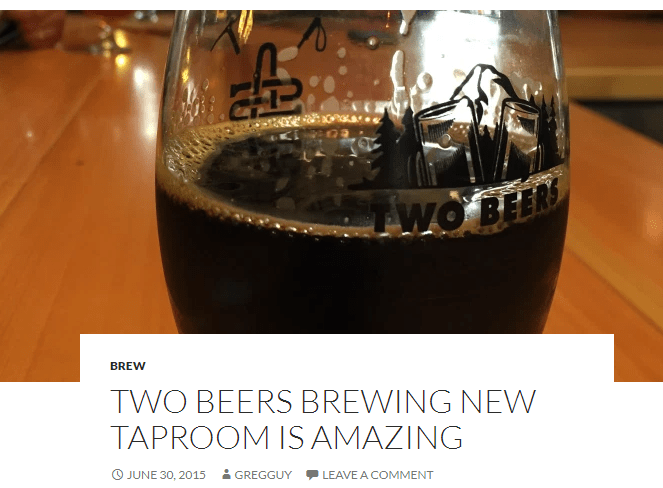
Years ago, back in 2015, I wrote a blog post about a bar that I liked, and they were launching a new tasting room. Within a couple weeks, I started an internship at a magazine in Seattle, and I found that the food and drink editor read that exact blog post. So, I discovered, people do see this stuff, they read it, and they take it seriously.
Along those lines, I’ve worked in social media for Microsoft, and other marketing agencies, and I promise you, the social media teams do see the content that’s posted about them; Some of the users will even become well known to the managers and community managers, so if you post frequently and regularly, the teams will get to know you.
Going back to Casey for a moment, his philosophy was to just do… You could also say that his attitude was to just do it… And that makes me think of another company.
Just do it, create your own stuff
Let’s look at Nike for a moment. I like Nike, I use Nike shoes – I seem to use their Pegasus running shoes. At the moment, I have the Zoom Pegasus running shoes model 37, size 11. I like to run, I use their shoes — So, what then? Well, I just do.
I have a brand, a product, and a category – Nike, running, running shoes, and now my goal is to create content that revolves around those three subjects, and the culture that is associated with it as well.

After all, running, Nike, shoes, those are all associated with fitness, health, lifestyle – so the goal should not be to create a bunch of boring, cookie-cutter pieces of content, this is an opportunity to create something that dives into the culture – show inspiring content about running, show the grit and determination to get better at what I’m doing, and curate content that follows that same attitude. To paraphrase Steve Jobs, he said that the reason why Nike is so successful is because they honor the athlete, they don’t merely try to sell shoes, they try to inspire people to change the world.
So, that should be the goal at this point – just do it, create content. Forget clients for now, just worry about your content.
However, it should be mentioned that a lot of resources encourage you to “find your niche,” and it should be noted that this is exactly what I just did – in this case, my niche is running.
Launch that content
Collect that data and put it into a portfolio
You should expect to take a little time with this part, because it’s nigh-impossible to create a portfolio after a couple days. Rather, give yourself about a month, and then after that month, take screen shots, and then store them somewhere. You’ll see on this blog, some of my social media screenshots are loaded on a page. You could also post this content on a PDF file, or you can use one of the tools that are listed on The Muse’s page of social portfolio sites. The goas is to show a plethora of content that can be immediately viewed – think about during a job interview when you’re asked about how you launched strategies, or your process of creating content, now you have something to refer to.
To expand on this, there’s a video from Greg Miller, many years ago, and he talked about how he got started in games journalism, or, specifically, how he got hired at IGN. He described about how he had a blog and he posted on that blog every day, and he just kept creating stuff every day. After a few months of this, he applied at IGN, and within 24 hours, they call him, interviewed him, and then offered him a job. All in a day. Even Greg said that his goal was not, nor should yours be, to get clicks, or get views, or build a huge audience; the goal is to create and put stuff out there, and get better at your craft. When Greg asked the guys at IGN why they finally hired him after getting rejected, like, 50 times, they said that he showed experience. He put stuff on his blog, he established a voice, and he got better. (It was more like 16 times, but, you get it.)
Again, like Casey, the goal is to just do.
So, when you take the time to create, put it together, then show it off. And then, the next thing to do, is to…
Network your f’kn ass off
This could potentially be the hardest part, unless you’re an extrovert, then it should be the most exciting. Either way, at this point, while I did write that people will see your content, you should also not take it for granted that you will. So, at this point, you’ll want to get out there and meet people, find out what they’re doing, hand them over a business card, and introduce yourself.
Networking events will be a must. However, this is also a good opportunity to find professionals on LinkedIn who work at the companies who’s attention you want on your content. For instance, if I’m going to post a couple months’ worth of content about Nike, then I might want to consider reaching out to the appropriate leadership at Nike and show them what I did, or, perhaps, at their agency, Wieden+Kennedy. Or, perhaps reach out to their recruiters and show them what you accomplished – your content, your strategy, and even the data that you collect. My theory is that this will lead to freelance assignments, or someone will ask you to apply to a job, or, it might lead to someone looking for help with their own social media. Heck, it’s happened to me, someone just reaching out because they need a little help. Make yourself available!
That’s it for now – to be continued.
 GYoung Digital Blog
Leave a comment